
WBD Picks Netflix Over Paramount: Certainty Beat Premium
Why Warner Bros Discovery chose a lower Netflix offer over a higher cash bid from Paramount, and what the decision says about execution risk.

By Harsh Karamchandani · CFA Charterholder | Trading Operations & Product Strategist
19 December 2025 · 3 min read
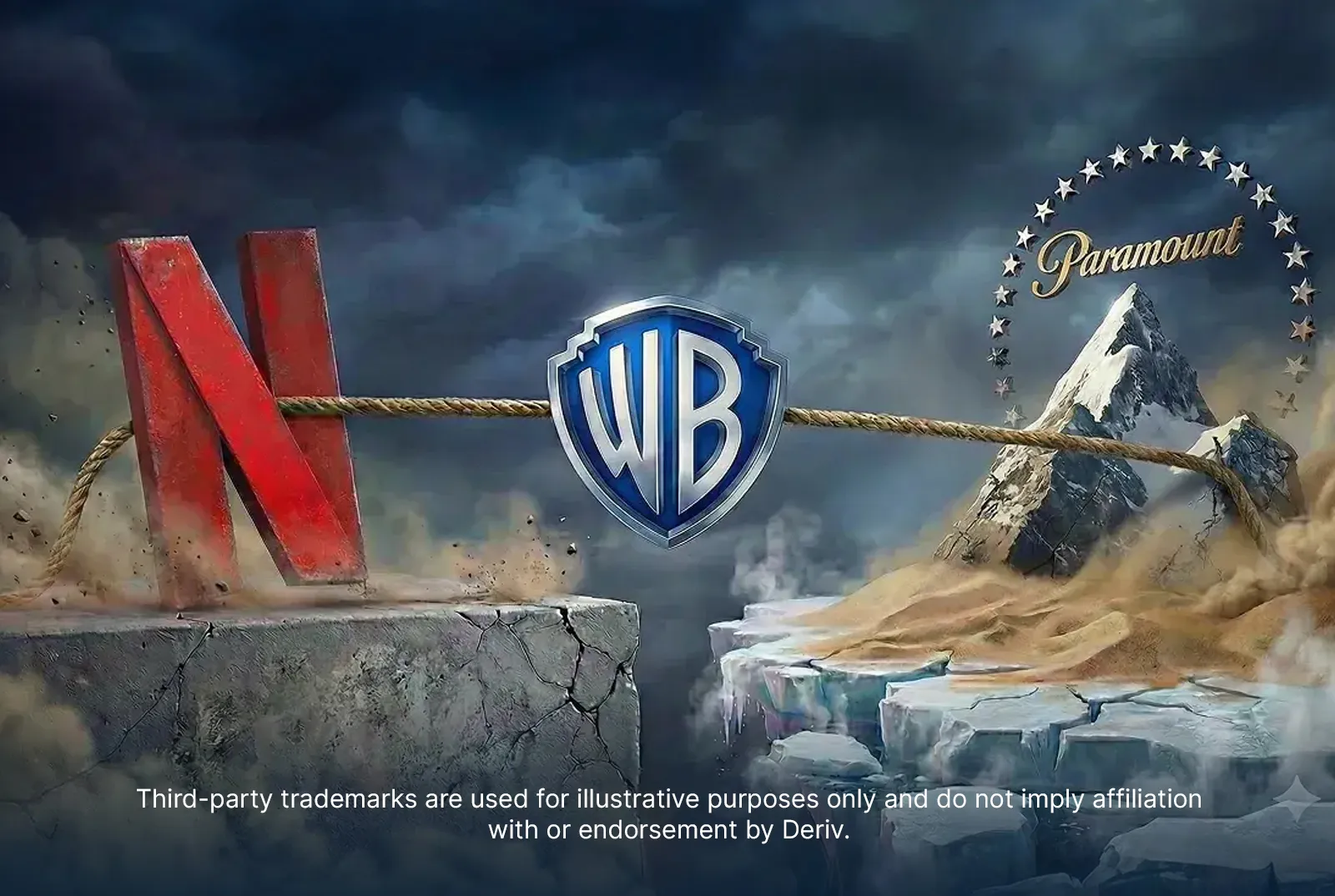
The core trade-off: Price vs. execution
In M&A, the highest price usually wins. But yesterday, the Warner Bros. Discovery (WBD) Board proved that execution risk can discount execution risk in trading even the most attractive cash offer.
On December 17, the Board officially rejected Paramount Skydance’s $30.00 all-cash bid in favor of Netflix’s $27.75 cash-and-stock deal. To the average observer, walking away from a premium of roughly $2.25 per share looks like a violation of fiduciary duty. However, when you strip away the headlines and look at the deal structure, the Board’s logic becomes clearer: they are choosing a "closed" deal over a "contingent" one.
The "illusory" capital structure
The WBD Board didn't just say "no", they attacked the structural integrity of the Paramount offer. Their rejection letter centered on the term "illusory financing".
From an operational standpoint, this is the critical flaw. Paramount’s bid relies heavily on the Ellison family fortune to fund the cash buyout. However, the Board revealed that this funding is backed by a "revocable trust," not an irrevocable commitment. In plain English, David Ellison can pay, but the legal structure doesn't force him to pay if conditions change. In a volatile market, that lack of a guaranteed backstop transforms a $30.00 offer into an unpriced option.
The $5.8 billion insurance policy
The second major factor is the "Reverse Termination Fee." This is the penalty a buyer pays if the deal is blocked by regulators.
- Netflix's fee: $5.8 billion. If the Federal Trade Commission (FTC) kills the Netflix deal, WBD walks away with a massive cash injection.
- Paramount's fee: Significantly lower ($5 billion) with fewer guarantees.
Netflix effectively bought the Board’s loyalty by writing a larger insurance policy. They priced in the regulatory risk, while Paramount asked shareholders to bear it.
The political "risk premium" spikes risk management strategies
Last week, Paramount’s higher regulatory risk (combining two legacy studios) seemed manageable because of their perceived political cover. That cover has evaporated.
On Tuesday, it was confirmed that Jared Kushner’s Affinity Partners withdrew from the Paramount bidding consortium. The exit of a key figure with direct ties to the incoming administration changes the calculus. Without that political buffer, the antitrust hurdles for a Paramount-WBD merger become glaringly high. The Board clearly decided that a 100% chance of $27.75 (or a $5.8B breakup fee) is worth more than a 50% chance of $30.00.
The decision desk: January 8
The Board has made its recommendation, but they don't hold the final vote, the shareholders do. Paramount’s hostile tender offer remains open until January 8, 2026.
This sets up a fascinating standoff. Institutional investors often prefer the "bird in the hand" (deal certainty). Retail investors often chase the headline price. Unless David Ellison tightens his financing terms and locks down his trust fund commitment before the deadline, disciplined capital will likely side with the Board and take the Netflix deal.