
Why Record Gold Buying Doesn't Always Lift the Price
China's gold imports hit a multi-year high yet the price keeps falling. Here is the tug-of-war between physical demand and the dollar, and how to read it.
By the Deriv desk · 24 June 2026 · 4 min read

Gold is a tug-of-war between two forces right now: strong Chinese demand pulling up, a hawkish Fed and rising dollar pulling down. The dollar is winning, so the price falls even as buying hits multi-year highs.
That is the key to reading gold. A bullish demand story and a bearish macro story can both be true at once. Price reflects whichever side has the upper hand today.
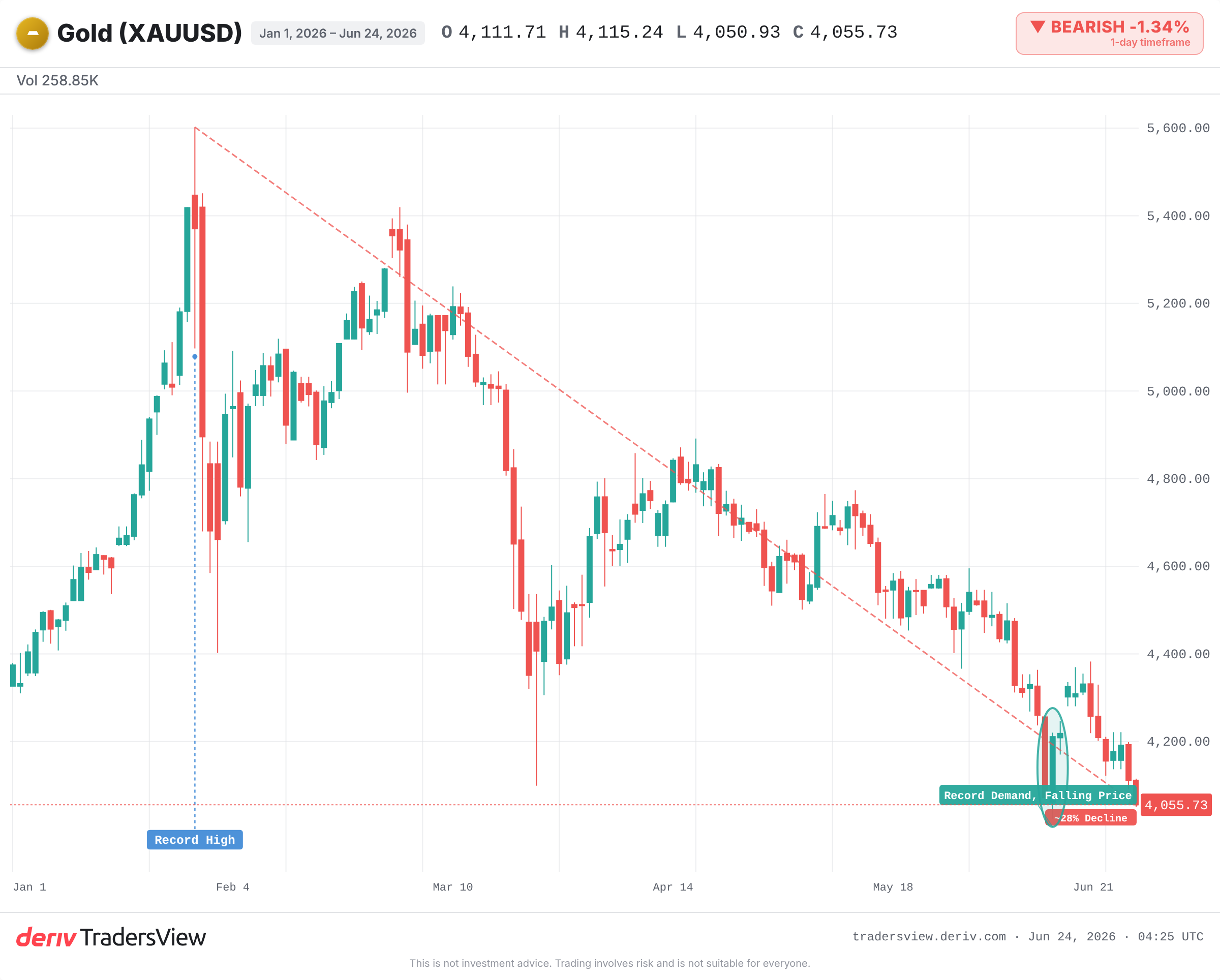
Why does strong Chinese demand not push gold up?
China's gold imports in May hit a 26-month high. Year-to-date imports are up sharply on last year. On paper, that is a wall of buying.
Yet gold sits well below its early-2026 peak. The reason is simple: demand is one force, not the only one. A buyer in Shanghai does not set the price; the global macro backdrop does.
This is not new. In 2013, record physical demand from China and India met Fed taper talk and a rising dollar. Gold fell anyway and entered a multi-year bear market. Demand was real. It just lost the tug-of-war.
How a strong dollar and the Fed pull gold down
Gold pays no interest. When the Fed signals higher rates, cash and bonds start to look more attractive by comparison. The cost of holding a metal that yields nothing goes up.
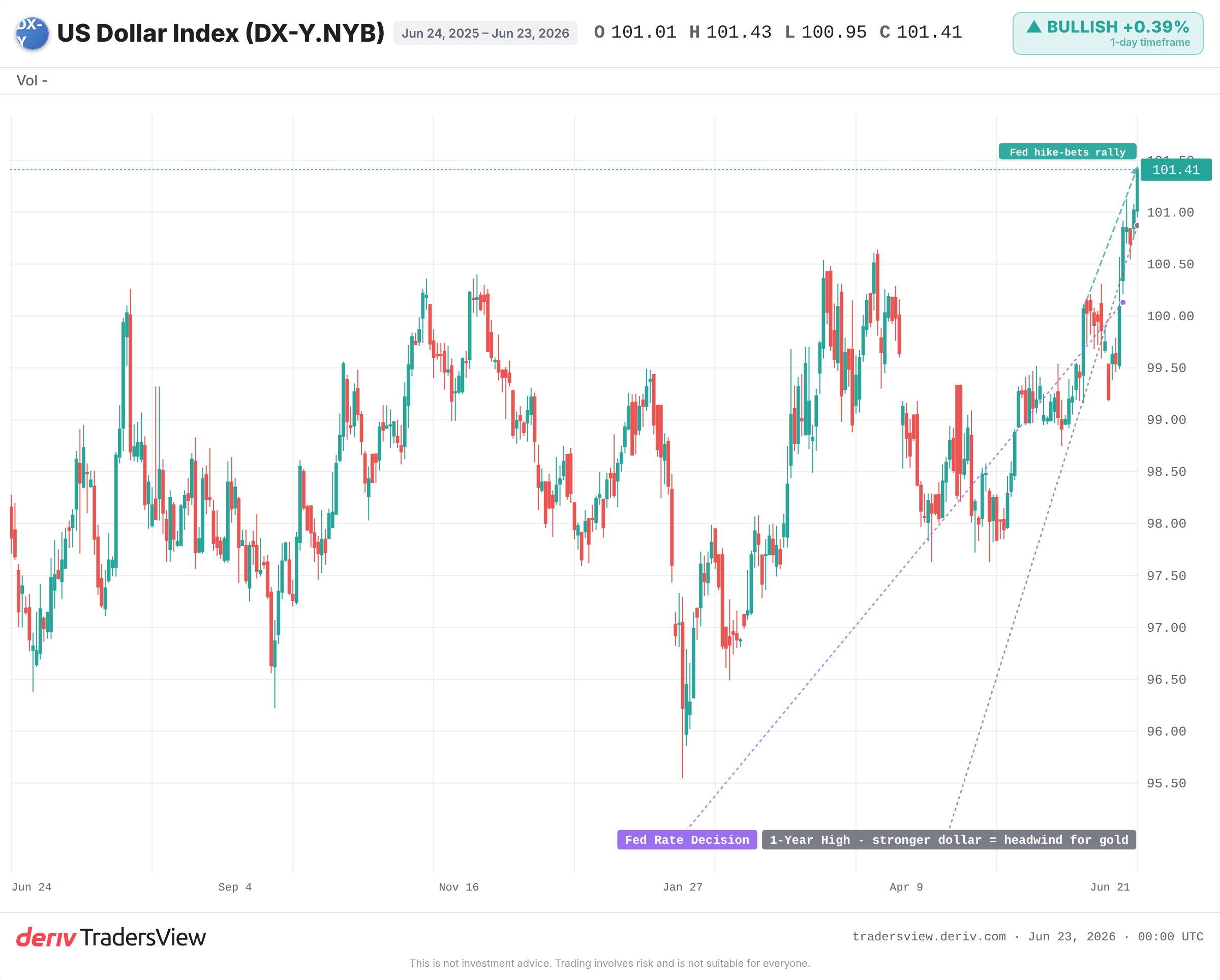
Rate-hike bets have lifted the dollar to a one-year high. Gold is priced in dollars, so a stronger dollar makes it more expensive everywhere else. That is a direct headwind.
Right now this side is winning. The same pattern played out in 2022: aggressive Fed hiking and a surging dollar dragged gold down even as central banks bought record tonnage.
The catch in China's record import number
Here is where the bullish story gets shakier. Much of May's surge looks like front-loading. Banks rushed to use import quotas before a new licensing regime started on June 1.
That means demand may have been borrowed from June and July, not a sign of fresh appetite. A data point can look bullish and still be a trap if it is pulling future buying forward.
If June and July import figures come in weak, the demand pillar collapses. That would leave the dollar firmly in control with nothing pushing back.
What actually supports gold underneath
Not all demand is borrowed. China's central bank added 10 tonnes to its reserves in May, the largest reported monthly rise since December. Central bank buying is slower but more durable than commercial flows.
This is the quieter pillar. It does not move price day to day, but it builds a floor over time. The 2022 case is the reminder that the macro force can flip: once the Fed pivoted, gold bottomed and rallied hard through 2023 and 2024.
How to read the next gold headline
The evidence leans bearish in the near term while the dollar holds the upper hand. That can change fast, which is the whole point of the framework.
When the next gold story lands, ask which force it feeds:
- Demand side: import data, physical buying, central bank purchases. Watch whether June-July China imports fall, which would confirm May was front-loaded.
- Macro side: Fed rhetoric, the dollar index, real yields. A continued push to fresh dollar highs keeps pressure on gold.
Then judge which side is winning. The headline alone never tells you. The balance of forces does.
Frequently asked questions
No. Central bank buying is a durable support but it works slowly. If the dollar is strong and rates are rising, those macro forces can outweigh steady central bank demand and push the price down, as happened in 2013 and 2022.
Gold trades globally in dollars. When the dollar strengthens, gold becomes more expensive for buyers using other currencies, which tends to cool demand and weigh on the price.
Front-loading is when buyers rush to import ahead of a deadline or rule change, pulling future demand into the present. It can inflate one month's figures while leaving the following months weaker, making a bullish data point misleading.
In late 2022. Aggressive Fed hiking had dragged gold down through the year, but once the Fed shifted toward easing, gold bottomed and rallied strongly through 2023 and 2024.