
Why Do Assets That Pay You Nothing Fall Hardest When Rates Rise?
Silver fell as much as 14% in a week because it pays no interest. Here is how rising rate bets and a stronger dollar raise the cost of holding metal.
By the Deriv desk · 26 June 2026 · 4 min read

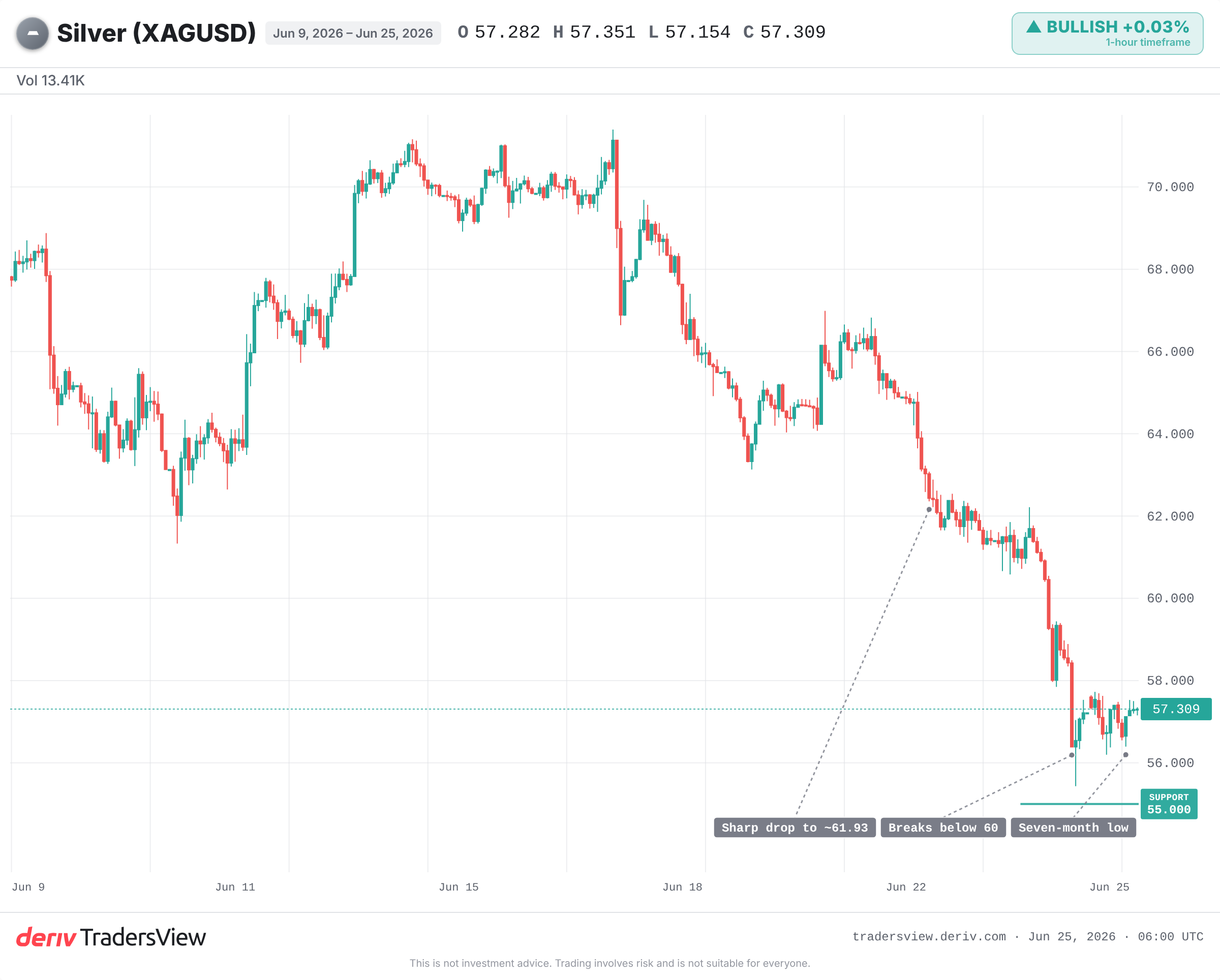
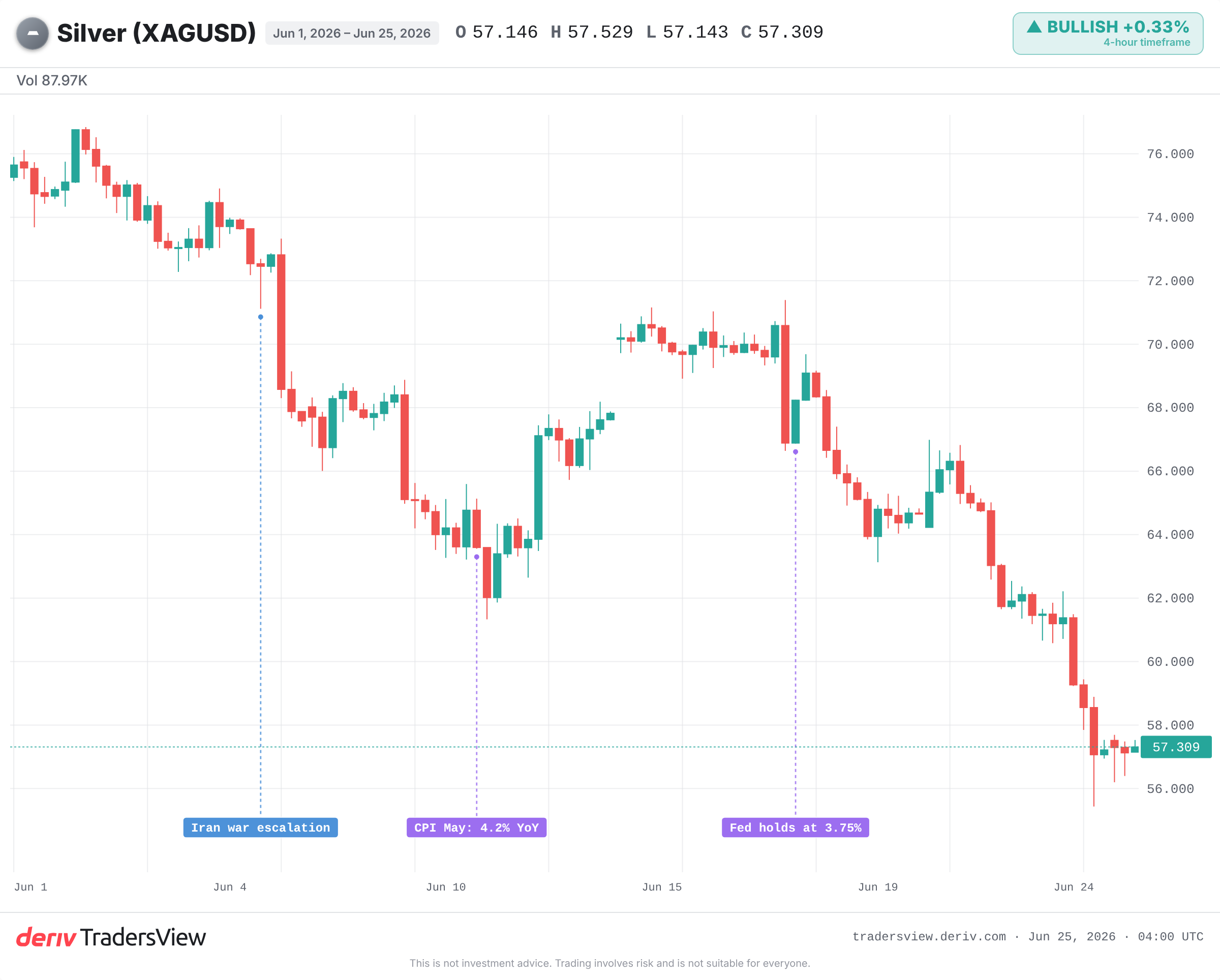
Silver just fell as much as 14% in a week because it pays no interest, and the cost of holding it shot up. When markets started pricing a Fed rate hike, the dollar and real yields climbed together. That is the worst possible backdrop for an asset that hands you no income while you wait.
Why a non-yielding asset has no defence against rising rates
Silver does not pay a coupon or a dividend. You hold it and hope the price rises. So the moment cash and bonds start paying more, the maths turns against you.
That extra return on cash is the opportunity cost of holding metal. When it rises, money rotates out. The sell-off was mechanical, not emotional: higher rate expectations raised the cost of holding silver, so it got sold first and hardest.
A stronger dollar piled on. Silver is priced in dollars, so a firmer dollar makes the same ounce more expensive for buyers abroad. The dollar index pushed to a multi-month high in the same week, draining demand further.
It was the rate path, not inflation, that broke silver
Here is the part most people get backwards. Silver is supposed to love inflation. Yet it cratered.
The driver was not spot inflation. It was the market shifting to price a September hike, which the futures market put near a 70% chance on CME FedWatch. Rising rate expectations lifted real yields, and real yields are the truest gauge of silver's holding cost.
This pattern has played out before. In 2022 the Fed hiked aggressively into hot inflation, the dollar surged to two-decade highs, and silver fell from near $26 to about $18, despite the inflation that was meant to support it. The metal only turned once the market began pricing a Fed pause late that year.
One macro force, many assets: how the dollar drags metals together
The same trade that sank silver tends to pull gold and other metals the same way. Higher rates and a stronger dollar are, in effect, one force hitting every asset that pays you nothing to hold it.
But each can break away when it has a stronger driver of its own. Gold held up better than silver here, and the gold/silver ratio widened. Safe-haven demand cushioned gold while silver, the more industrial and more volatile metal, took the full blow.
What could make silver snap back fast
The bearish case rests on one assumption: that the September hike is close to a done deal. It is not. A 70% market-implied probability is an opinion, not a certainty.
A soft inflation or jobs print could collapse those odds, pull the dollar and yields back, and let non-yielding metals recover quickly. That is exactly what happened in late 2022 and again in 2020, when silver rocketed from around $12 to near $29 as real yields turned deeply negative.
The depth of this drop matters too. With year-over-year gains cooling hard from peaks above 170%, much of the rate-hike fear may already sit in the price.
The evidence leans on the rate path: while the market prices a hike and the dollar holds its highs, silver stays under pressure; a downside surprise in the data is what flips it. Watch the next PCE print, the FedWatch odds for September, and whether real yields keep climbing. On the chart, the $55 support flagged by analysts is the line that decides whether this is a pause or a deeper leg down. Metals are volatile and can move sharply on a single data release.
Frequently asked questions
Not automatically. Silver tends to weaken when rate expectations and the dollar climb together, because the cost of holding a non-yielding asset rises. But silver can break away if it has a stronger driver, such as strong industrial demand or a sharp safe-haven bid.
Silver is more volatile and has a large industrial demand component, so it tends to move more sharply in both directions. When the same macro force hits both metals, silver usually shows the larger swing, which widens the gold/silver ratio.
It is the number of silver ounces it takes to buy one ounce of gold. A widening ratio signals silver is underperforming gold, which often happens when silver is being sold harder during a risk-off or rate-driven move.
Real yields are interest rates after inflation, and they represent the return you give up by holding a metal that pays nothing. When real yields rise, that holding cost increases and metals tend to weaken; when they fall, metals often recover.