
Payrolls test the pullback in December rate-rise expectations
Thursday's tech sell-off cut the chance of a December Fed rate rise to 66%. How today's US jobs report could move stocks, yields, gold and the dollar.
By the Deriv desk · 6 November 2026 · 4 min read

Thursday's tech sell-off cut the chance of a Fed rate rise in December from 82% to 66%, the lowest in the past two weeks. The US jobs report at 13:30 GMT is the first test of that change.
| JOBS ADDED ~60k forecast · Sept 29k | UNEMPLOYMENT 4.2% forecast · Sept 4.2% | HOURLY EARNINGS +0.3% forecast · Sept +0.1% | DECEMBER RISE 66% chance at Thursday's close · 82% Wednesday |
Jobs-report days move stocks more than most: since December 2021 the S&P 500 has moved a median 0.8% on release days, against 0.5% on other days (57 reports, The Right Trader).
Read the revisions as closely as the headline. Last month's report cut July and August by a combined 60,000 jobs, more than September's 29,000 gain. Today's revisions to August and September can change what the headline means.
What the report could mean for stocks
Two forces decide it. Rates set what investors pay today for future profits: a lower chance of a December rise brings yields down and supports valuations, technology most. Growth sets the profits themselves: a weaker economy cuts them. The two can move on different timetables, so the first reaction is not always the lasting one.
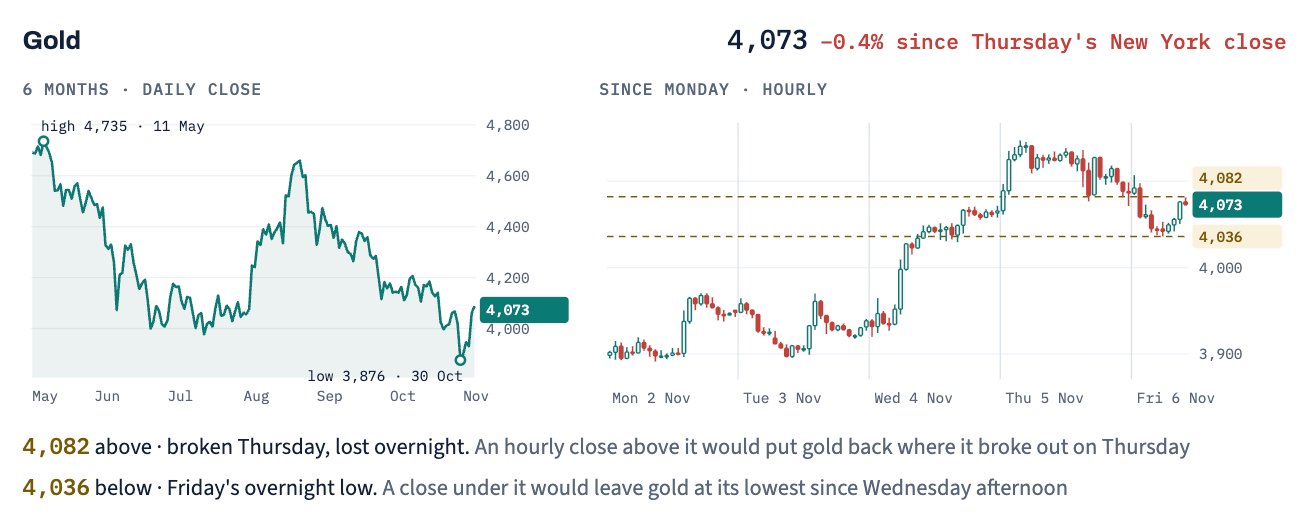
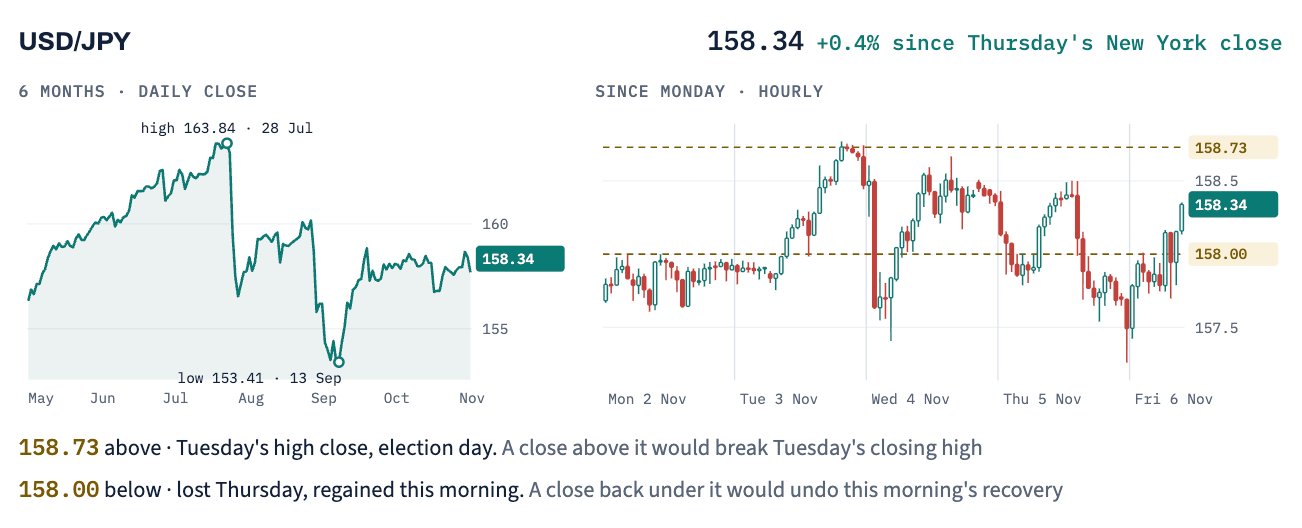
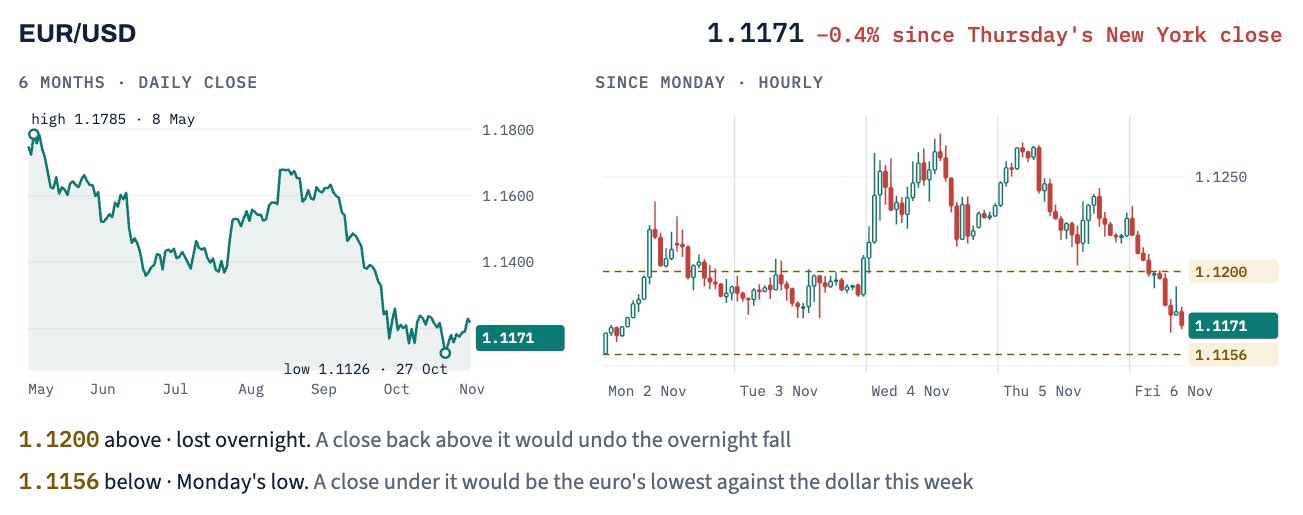
| Hot Jobs above 100k, earnings +0.4% or more, unemployment 4.2% or lower | Fast wage growth is what the Fed worries about, so a December rise would look more likely. Higher yields make future profits worth less today, and technology usually feels it most. The dollar usually rises against the yen and the euro, and gold usually falls. |
|---|---|
| Firm, wages calm Jobs above 60k, earnings +0.3% or less, unemployment 4.2% or lower | The economy holds up without adding to inflation. The rate outlook may change little, which would leave Thursday's data-centre worries in charge of stocks. |
| Mixed Jobs below 60k, earnings +0.4% or more | The two halves disagree: weak hiring argues against a rise, fast wages for one. First reactions to split reports are often choppy, and yields show which half the market believes. |
| Soft Jobs 0 to 60k, earnings +0.3% or less, unemployment 4.2% | A cooler jobs market makes a December rise less likely and lowers yields, which supports valuations. The dollar usually falls against the yen and the euro, and gold usually rises. |
| Weak Jobs below zero, or unemployment 4.3% or higher | The two forces pull against each other: lower yields support valuations while a shrinking jobs market hurts profits. Which one wins can change over the following days, and a sharper rise in unemployment favours the growth worry. |
How to read the reaction
Yields alone cannot tell you which force is leading: in a weak report, yields and stocks can fall together. Read Treasury yields and the US Tech 100 side by side.
| Yields down, stocks up Suggests rate relief is leading | Yields down, stocks down Suggests the growth worry is leading |
|---|---|
| Yields up, stocks down Suggests rate worries are back, usually on wages | Yields up, stocks up Suggests strength is being read as good news |
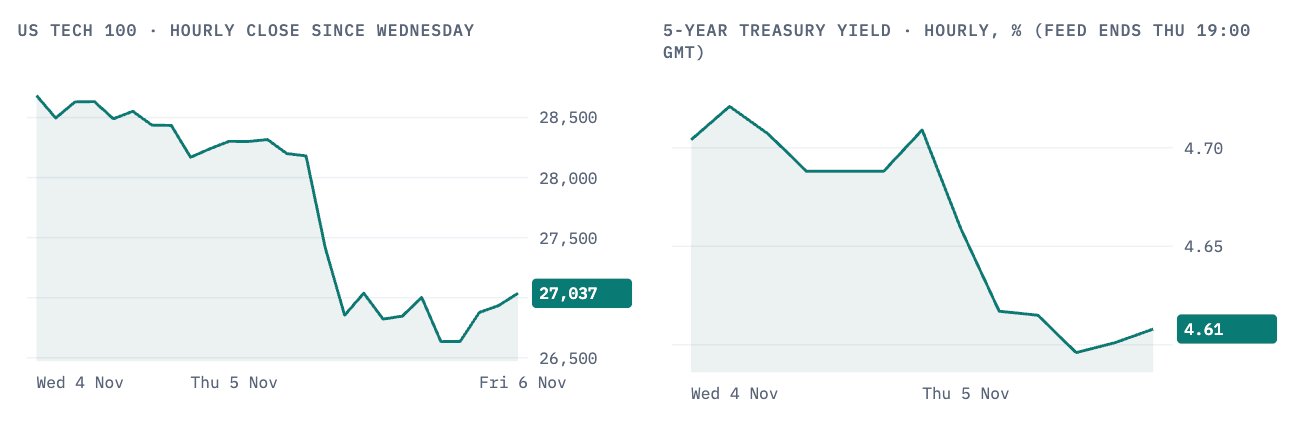
Thursday was the "yields down, stocks down" case.
How the chance of a December rise moved
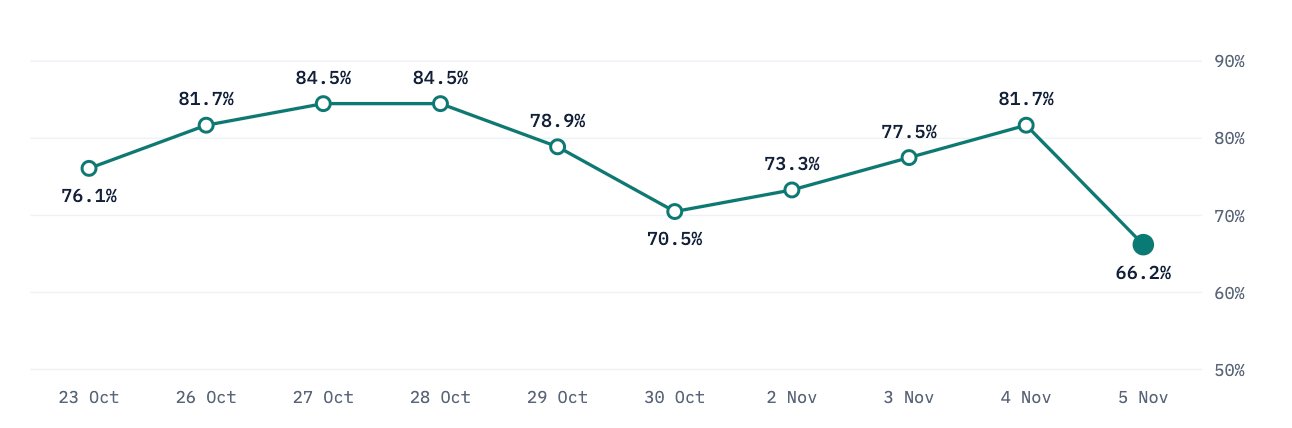
Each time stocks fell hard, on 30 Oct and again on Thursday, the chance of a December rise fell with them.
Thursday: the US Tech 100 fell 6.3%
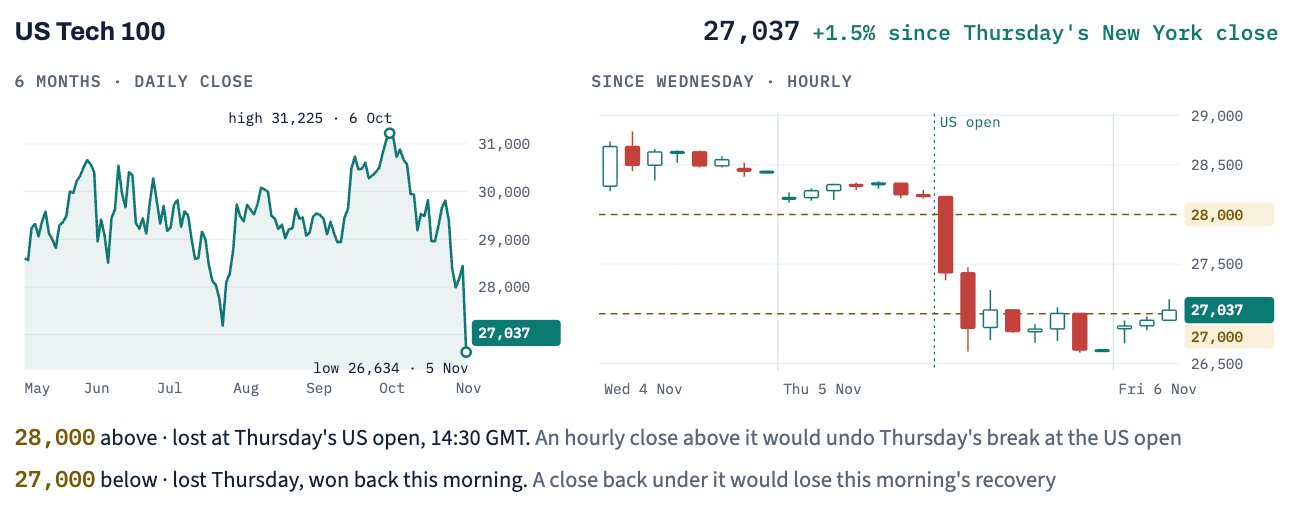
News reports tie the selling to worries that Democratic midterm wins will slow data-centre building. The 5-year Treasury yield fell 10 basis points over the same hours, so this was a worry about profits and data-centre rules, which lower rates do not answer on their own. The index is back above 27,000 this morning, 13% under its 6 Oct high.
Levels to watch
Today, in GMT
13:30 US jobs report for October
14:30 US stock market opens
9 Dec Next Fed decision, 19:00 GMT
Prices: Deriv. Forecasts: Dow Jones, FactSet. Odds: CME FedWatch.
This content is not intended for EU residents. The performance figures quoted refer to the past, and past performance is not a guarantee of future performance or a reliable guide to future performance.